
Traveling after 60 involves a rapidly growing segment of the population. According to Eurostat, the proportion of travelers aged 65 and over who have taken at least one leisure trip increased by 6% between 2023 and 2024, the highest rise among all age groups.
This ranking of destinations is aimed at seniors looking for more than just a classic beach holiday, with specific criteria: accessibility of infrastructure, availability of adaptable physical activities, and quality of the local healthcare system.
1. Andalusia, Spain

Andalusia combines a mild climate almost all year round with a network of marked trails in the Sierra Nevada and the Sierra de Grazalema. The hikes are graded by difficulty, allowing each outing to be adapted to one’s physical condition on the day.
The Spanish hospital network is among the best rated in Europe, a criterion often underestimated when choosing an adventure destination. Cities like Granada or Seville also have public transport suitable for reduced mobility, useful for alternating active days with cultural visits.
Francophone resources like seniorsdumonde.fr provide concrete feedback before finalizing an itinerary independently or through a specialized agency.
2. New Zealand
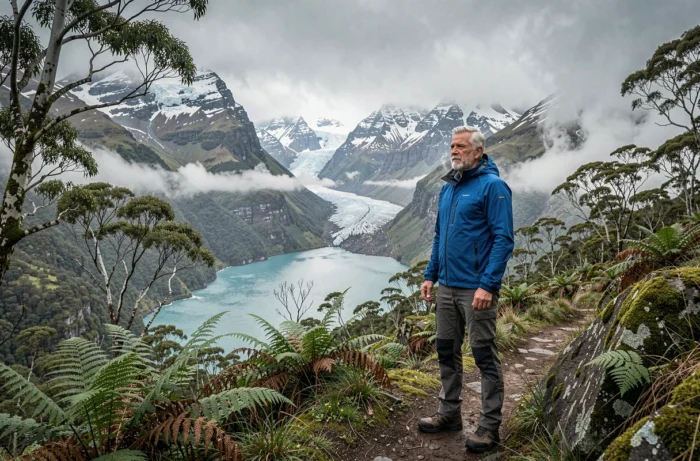
New Zealand offers a network of Great Walks maintained by the Department of Conservation, with accessible huts along the routes. The Milford Track or the Routeburn Track attract walkers of all ages thanks to short and well-marked stages.
The time difference is the main constraint for European travelers. Allowing two to three days for acclimatization upon arrival significantly reduces fatigue and the risks associated with jet lag, especially for those on chronic medication whose schedules are aligned with a specific time zone.
3. Norway and its fjords
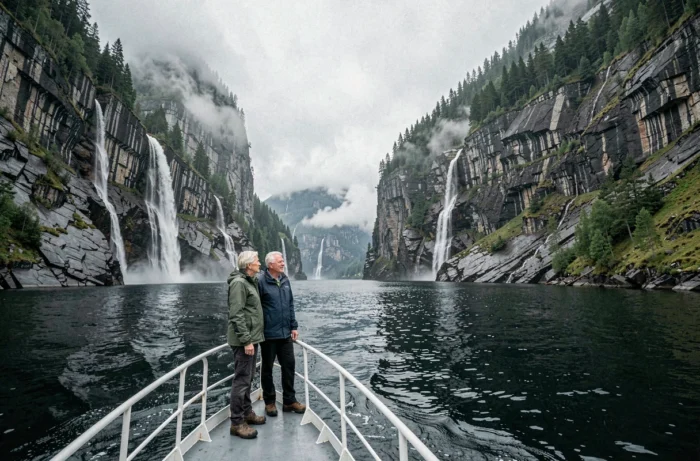
Sailing along the Norwegian fjords remains one of the most comfortable ways to discover spectacular landscapes without prolonged physical effort. Coastal cruises like Hurtigruten offer daily stops where short excursions are available.
In France, nearly 584,000 cruise passengers boarded in 2025, and over 65% of cruise customers are over 60 years old. Some companies now include medical presence on board, a direct advantage for seniors who hesitate to stray far from their primary care physician.
4. Tenerife, Canary Islands

Tenerife offers a varied playground: Teide National Park rises to over 3,700 meters, but flat coastal trails also line the northwest coast. This altimetric diversity allows for a balanced effort during the same week of stay.
The flight from France takes about four hours, with no significant time difference. This logistical factor simplifies the management of medical treatments and limits transport fatigue, a concrete advantage compared to distant destinations.
5. Corsica
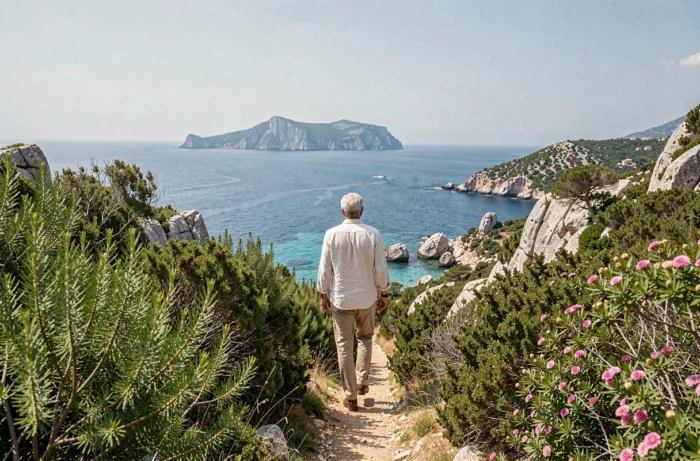
Corsica is not just reserved for the full GR20. The southern stages of the Mare a Mare trail, between Propriano and Porto-Vecchio, pass through forests of laricio pines on moderate elevations. Traveling in Corsica off-season, between May and June, guarantees pleasant temperatures and reduced foot traffic on the trails.
The island’s healthcare network has improved, with hospitals in Ajaccio and Bastia capable of handling common emergencies. Proximity to the mainland (less than two hours by plane) also provides reassurance in case of necessary repatriation.
6. Portugal, from the Algarve to Madeira
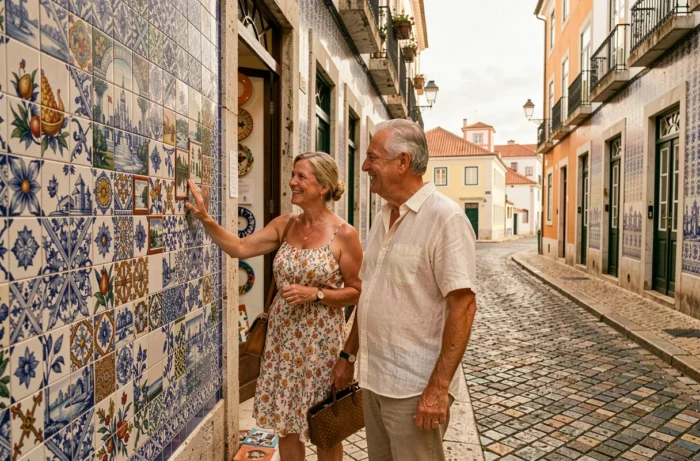
Madeira has a unique network of levadas, these irrigation channels transformed into hiking paths along the mountainside. The routes are mostly flat, despite the altitude, making them suitable for regular walkers who want to avoid steep descents.
Portugal regularly ranks among the best countries for expatriate retirees, thanks to its moderate cost of living and accessible public healthcare system. The Algarve, more beach-oriented, allows for a mix of sea kayaking, birdwatching in the Ria Formosa, and relaxation.
7. Japan

Japan stands out for its rare punctuality and comfort in railway infrastructure. The Japan Rail Pass allows travel from Tokyo to Kyoto, then Hiroshima, without the hassle of driving. European travelers over 60 are indeed a growing segment in this destination.
The Kumano Kodo pilgrimage paths in the Kii Peninsula offer a physical alternative to temple visits. The stages are short and accommodations in ryokan, with thermal baths (onsen), facilitate muscle recovery at the end of the day.
8. Croatia
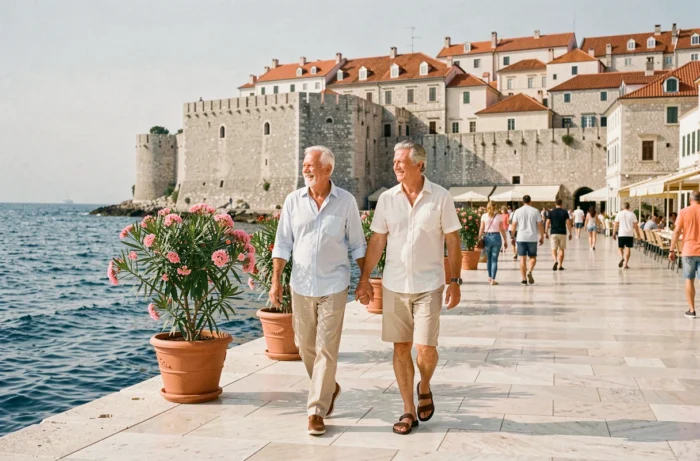
Croatia combines a preserved Adriatic coastline with national parks like Plitvice, whose wooden walkways make the visit accessible without any particular physical condition. The country remains financially more affordable than Italy or Greece for a comparable level of service.
Sailing between the Dalmatian islands on a local ferry is an adventure in itself, at a slow pace. Croatia is particularly suited for solo travel, a trend that is on the rise among seniors according to several recent market studies.
9. Mainland and Island Greece

Greece is not limited to Santorini. The Meteora in Thessaly offers hikes between monasteries perched on rocky peaks, with well-maintained trails. In 2024, Greece recorded a notable increase in short stays among European seniors.
The Dodecanese islands (Karpathos, Tilos) remain less frequented and offer coastal paths without excessive tourist marking. The cost of a stay there remains moderate, especially in the off-season.
10. Australia, Great Ocean Road
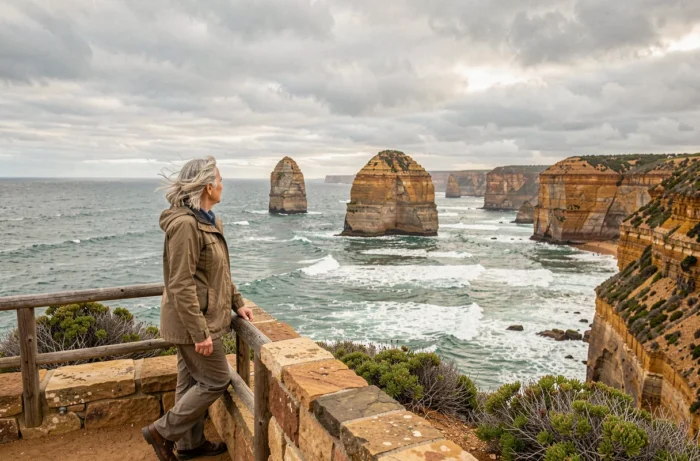
The Great Ocean Road stretches along the southern coast of Victoria for about 250 kilometers. This road trip lends itself to a slow pace, with frequent stops to observe cliffs, penguin colonies, and the Otway rainforest.
The main challenge remains the flight from Europe, which exceeds twenty hours with a layover. Planning a stopover in Singapore or Dubai breaks up the journey and reduces fatigue. Australia has a high-performing healthcare system, with regional hospitals along the route.
Each of these destinations meets a different need: geographical proximity, suitable elevation, medical presence, or radical change of scenery. The final choice depends as much on health status and tolerance for time differences as on the desire for discovery. Seniors today represent the fastest-growing tourist segment in Europe, and the range of suitable adventure travel options continues to expand to meet this demand.