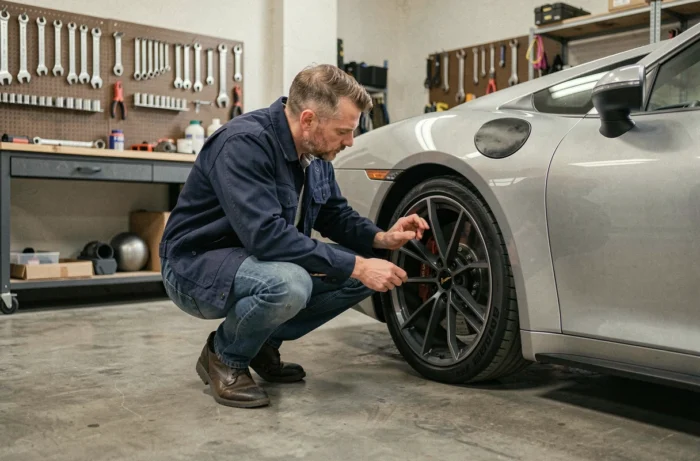
The automobile is no longer just about choosing an engine type or body color. The massive arrival of electric vehicles on the second-hand market, new technical inspection rules, and changing purchasing criteria are transforming how we evaluate, buy, and maintain a car in 2026.
Battery Health: The Criterion That Replaces Mileage
On a combustion car, the odometer gives a quick idea of mechanical wear. On a second-hand electric vehicle, this reference loses much of its relevance. The parameter to monitor is called SoH (State of Health), which expresses the remaining capacity of the battery compared to its original capacity.
A vehicle showing 60,000 km with a SoH of 78% will cost much more to operate than another with 90,000 km whose battery retains 92% of its capacity. The difference translates directly into real daily range.
Professionals have committed to displaying the battery health of second-hand electric cars, which changes how these vehicles are evaluated. To keep up with these developments and compare available models, exploring the auto universe on Déclic Auto helps better guide your research before making a purchase.

Safety Recalls and Vehicle Technical Inspection: What Has Changed in 2026
Since January 1, 2026, a vehicle subject to a ‘stop drive’ recall can no longer be driven until the repair has been completed. This measure particularly concerns certain Takata airbags, whose defect can cause metal shards to be projected during deployment.
In practical terms, the technical inspection can no longer be validated if the recall has not been addressed. The vehicle is automatically subject to a re-inspection, and only an intervention by the manufacturer can lift the block. This measure particularly affects owners of older vehicles and collectors who do not always follow recall campaigns.
Most Common Failures in Technical Inspections
The report released in 2026 by UTAC-OTC places defects related to tires, wheels, and suspensions at the top of the non-conformities detected. This is no coincidence: these elements undergo daily wear that many drivers underestimate.
- Worn tires below the legal threshold or showing bulges on the sides, often invisible to the naked eye without close inspection
- Shock absorbers whose effectiveness has gradually decreased, without obvious symptoms in urban driving, but detected on the test bench
- Cracked suspension ball joints and bushings, a source of mechanical play and noise, which go unnoticed until the vehicle is lifted
Having these points checked before going for a technical inspection avoids a re-inspection and the cost of a second visit.
Second-Hand Electric Vehicle Market: A Recent Acceleration
The second-hand electric vehicle market has long remained niche. The first generations of vehicles, often limited in range, attracted only a knowledgeable audience. The situation has recently shifted, driven by rising fuel prices and the arrival of newer, better-equipped models on the secondary market.
Depreciation remains a concern. Some models lose a significant part of their value within a few years, which is a deterrent for first-time buyers but an opportunity for second-hand buyers. The government is also trying to reassure owners on this issue.
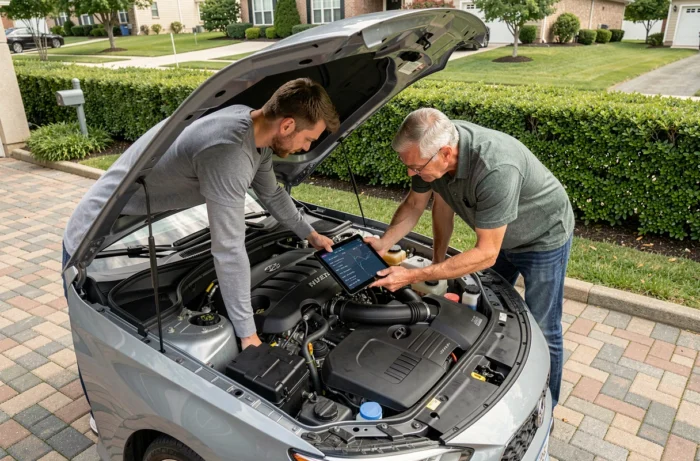
Assessing the Real Cost of a Second-Hand Electric Vehicle
The purchase price alone is not enough. Three elements determine the real cost of ownership:
- The remaining warranty on the battery, which varies by manufacturer and may or may not cover replacement in case of excessive degradation
- The charging cost depending on usage (home, public stations, fast charging), which fluctuates based on subscriptions and local rates
- Reduced mechanical maintenance compared to combustion vehicles (no oil changes, no clutch, regenerative braking that preserves the pads)
A well-chosen second-hand electric vehicle can prove to be more economical than an equivalent combustion vehicle over three years, provided the battery condition has been checked beforehand.
Diesel, Gasoline, or Plug-in Hybrid: Choosing Based on Actual Use
The choice of engine type primarily depends on the driving profile. A daily trip of less than 40 km in an urban area does not justify the same criteria as regular highway use of several hundred kilometers per week.
According to cost of ownership analyses released in 2026, plug-in hybrids and diesel are not always the cheapest options once all costs are added up (fuel, insurance, maintenance, depreciation). The least expensive engine type varies based on annual mileage, trip types, and expected ownership duration.
Diesel maintains an advantage in raw consumption on the highway, but its maintenance costs (particulate filter, AdBlue, turbo) and accelerated depreciation in certain low-emission zones reduce this gap. The plug-in hybrid, often more expensive to purchase, only becomes cost-effective if daily charging is actually performed, which requires reliable access to a socket or charging station.
Before signing, calculating the cost over the expected ownership duration remains the most reliable method to avoid an unpleasant surprise. Underlying trends are steering the automotive market towards electric vehicles, but the right choice remains one that aligns with each driver’s reality.