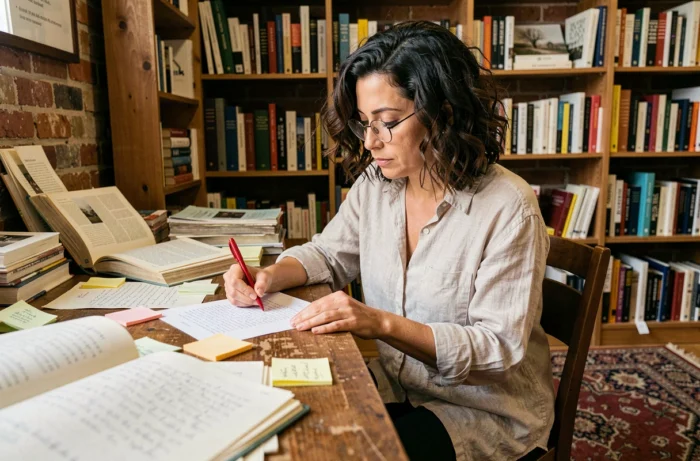
The alternative editorial scene in France relies on lightweight structures, often run by one or two people, that publish texts rejected or ignored by large groups. These independent publishing houses create catalogs where editorial choice takes precedence over immediate profitability. The French book market is going through a contraction period, and it is these small structures that are absorbing the shocks the hardest.
Closure of bookstores and pressure on independent literary creation
Have you noticed that a neighborhood bookstore has disappeared near you? This is not an isolated case. The National Book Center has recorded, for the first time since it began tracking, more bookstore closures than openings in France.
This decline directly affects independent publishers. Their model relies on local recommendations: a bookseller who reads a manuscript, recommends it to their customers, and organizes a meeting with the author. Without nearby bookstores, the discovery chain breaks. The large groups compensate with the power of their distribution and advertising budgets.
The National Publishing Syndicate confirms a decline in the turnover of publishers and the number of copies sold in 2025. For a house that publishes five or six titles a year with limited cash flow, each unsold copy weighs heavily. The risk is not only financial; it affects the very diversity of the texts published. Ambitious literary projects that would have found their audience ten years ago through word-of-mouth in bookstores now remain in drawers.
Among the spaces that document this independent literary creation and its actors, there are online journals like https://www.revue-bancal.fr/, which highlight editorial approaches often absent from mainstream media.

Editorial concentration: what catalogs lose
French editorial production is increasingly concentrated around players capable of publishing in large quantities. A study by the Axiales firm, published in 2025, shows this structural advantage: groups with abundant catalogs, promotional capabilities, and powerful distribution capture a growing share of the market.
In practical terms, this means that texts that do not fit dominant formats find less and less space. A collection of experimental short stories, a debut novel by an author without a network, a translation of a little-known writer: these projects do not interest large houses focused on volume.
Independent publishing plays a specific role here. It does not publish “differently” out of posture, but because it occupies the ground that the groups abandon. A few markers to understand what distinguishes these structures:
- A small reading committee (sometimes just one person) that reads each manuscript in its entirety, whereas large houses filter by synopsis and agent recommendations
- Modest print runs, often a few hundred copies, adjusted to actual demand rather than a logic of piles in bookstores
- A direct relationship with authors, without intermediaries, where the publishing contract is negotiated on a case-by-case basis rather than according to a standard imposed model
This proximity has a cost: the time dedicated to each title is non-negotiable, and the profitability of an independent book is measured in years, not weeks.
Generative AI and copyright: a blur that weakens independent authors
The arrival of generative AI in the literary field raises concrete questions for small publishers. Why does this subject concern them primarily? Because their authors, often little known, have fewer legal means to defend their rights.
In France, a book entirely generated by AI does not benefit from copyright protection as defined by the Intellectual Property Code. Originality, in the legal sense, requires a mark of the author’s personality. A text produced by an algorithm without significant human creative intervention does not meet this criterion.
The problem lies in the gray area of texts co-written with AI. Where to draw the line between technical assistance and creation? Traditional publishing contracts do not foresee this situation. Some independent houses are beginning to include transparency clauses, requiring the author to disclose any potential use of generative tools.
The question of training AI models on protected works remains open. Texts by independent authors can feed training corpora without permission or compensation. Small publishers lack the weight and resources to engage in these discussions with technology companies.
Supporting the alternative editorial scene on a daily basis
Buying a book published by an independent publisher in a bookstore rather than on an online platform changes the game for two links in the chain: the bookseller and the publisher. This gesture is not symbolic; it determines the economic viability of both.
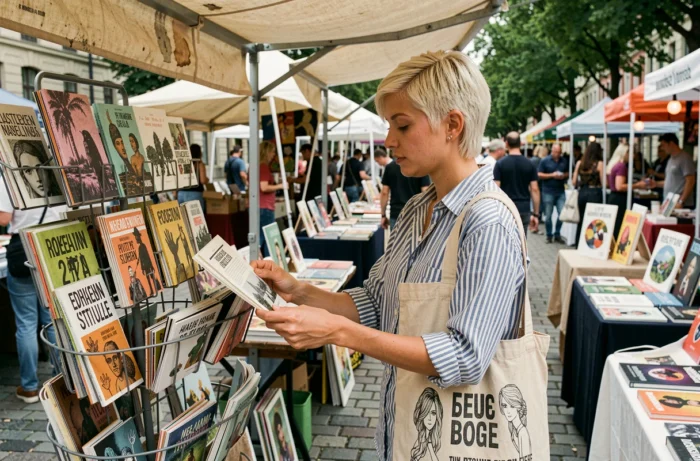
Literary fairs and festivals remain direct meeting places between readers and creators. These events allow small publishing houses to present their catalogs to an audience that would not encounter them otherwise.
- Subscribing to an independent literary journal guarantees recurring income for the structure, less subject to the whims of bookstore sales
- Participating in crowdfunding campaigns launched by some publishers for specific projects (translations, debut novels) offers visibility ahead of publication
- Sharing titles discovered on social media or in reading circles amplifies digital word-of-mouth, the only promotional lever accessible to these structures
Independent literary creation does not require patronage, but an active readership. Every title purchased, every recommendation shared, every visit to a bookstore strengthens an ecosystem that the concentration of the market and technological changes put under tension. The diversity of texts published in France depends, to a significant extent, on these repeated gestures.