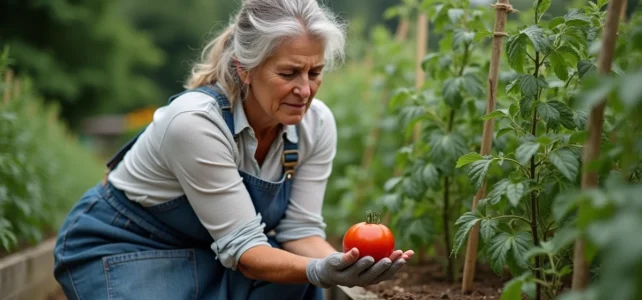
The skin of a tomato is a protective tissue, the epidermis, whose thickness varies according to the plant’s genetics, growing conditions, and maturity stage. When this skin becomes tough enough to hinder tasting, the problem is almost never related to a single factor. Understanding the mechanisms at play allows for action on the right levers in the garden, from variety selection to watering management.
Thermal stress on the fruit: the temperature threshold to monitor
Most gardeners think about heat stress on the plant, but the most direct phenomenon concerns the temperature of the fruit itself. When the tomato exceeds about 30 °C on the surface, maturation becomes disrupted.
The top of the fruit then remains yellow and hard, with a skin that is significantly tougher than the rest. This disorder is distinct from simple wilting of the foliage: it is the fruit, exposed to direct sunlight, that undergoes localized hardening of its epidermis.
A nutritional imbalance exacerbates the phenomenon. A lack of potassium, combined with high heat, prevents the tomato from producing the pigments and enzymes that naturally soften the skin at maturity. To limit this stress, sufficiently dense foliage above the clusters acts as a natural parasol. Pruning the suckers too severely exposes the fruits and encourages this hardening.
Better understanding the causes of thick tomato skin helps to distinguish what is due to thermal stress from what is related to other factors.
Irregular watering and thick tomato skin: the direct link
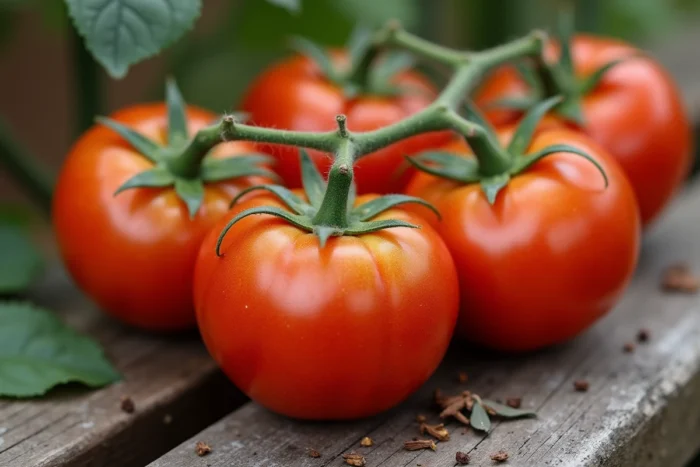
Water plays a central role in the texture of the skin. Irregular watering is the most common cause of hard skin in homegrown tomatoes.
When the soil dries out for several days, the tomato activates a defense mechanism: it thickens its epidermis to limit water loss through transpiration. If a heavy watering occurs suddenly afterward, the fruit swells faster than the skin can stretch. The skin remains hard, and in the most pronounced cases, it cracks.
The trap of massive watering after a dry period
This “catch-up” reflex is the most damaging gesture. After a week without rain or watering, resuming with a moderate supply over two or three days allows the plant to rehydrate gradually. The skin then has time to regain some flexibility.
Mulching at the base of the plants regulates soil moisture between waterings. It limits the water shocks that trigger hardening. An organic mulch (straw, dried clippings, shredded material) maintains a more constant humidity than bare soil, especially in summer.
- Water at the base, preferably in the morning, with a moderate flow rather than a powerful jet that compacts the soil.
- Maintain a mulch of at least a few centimeters thick around the plants to smooth out moisture variations.
- After an absence or a heatwave, resume watering with small doses over two to three days instead of a single massive supply.
Tomato varieties selected for thick skin: a choice often overlooked
Not all tomato varieties have the same skin thickness, and this parameter is partly determined at the genetic selection stage. Industrial varieties are selected to withstand transport, which implies thicker skin and firmer flesh.
A plant purchased at a garden center under a generic name (“round tomato,” “cluster tomato”) often comes from these lines. The result in taste can be disappointing, even with impeccable cultivation. The skin remains hard because the genetic makeup of the plant is designed for that.
Thin-skinned varieties for the home garden
Heirloom or traditional varieties generally have thinner skin and more melting flesh. The Cornue des Andes and the Green Zebra, for example, are regularly cited by gardeners as varieties with soft skin. Heirloom cherry tomatoes also tend to have a more delicate epidermis than their hybrid counterparts.
Variety selection is the only factor that can be acted upon even before planting. A thick-skinned variety will remain thick-skinned, regardless of the care provided. Checking this criterion at the time of purchasing seeds or plants avoids disappointment at harvest.
Calcium, potassium, and soil nutrition: what the plant cannot compensate
Calcium and potassium directly affect the cellular structure of the tomato. A deficiency in calcium causes blossom end rot (the “black bottom”), but it also contributes to a rigid epidermis. This disorder is a transport problem of calcium within the plant, not always a lack in the soil.
A soil properly supplied with calcium can still produce deficient tomatoes if watering is irregular: water is the vehicle for calcium to the fruit. Without regular water flow, calcium remains trapped in the roots and leaves.
Potassium, for its part, participates in pigment synthesis and skin softening during maturation. A soil poor in potassium, or an excess of nitrogen that blocks its absorption, produces tomatoes whose skin does not soften normally as they ripen.
- Add mature compost or a lime amendment at the beginning of the season if the soil is acidic.
- Avoid excess nitrogen fertilizers that promote foliage at the expense of fruiting and mineral transport.
- Maintain regular watering to ensure the transport of calcium and potassium to the fruits.
The hard skin of tomatoes most often results from a combination of factors: unsuitable variety, erratic watering, and unbalanced nutrition. Correcting a single parameter rarely improves the situation dramatically. Choosing a thin-skinned variety, combined with regular watering and properly amended soil, remains the most reliable combination for producing enjoyable fruits without peeling them.