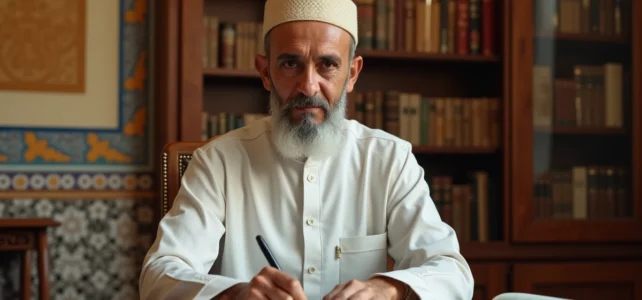
When preparing for a Muslim religious wedding, the question of the imam’s fee often arises late in the organization process. The couple focuses on the venue, the caterer, the outfits, and then realizes that they also need to budget for the nikah ceremony itself. The amount to be budgeted rarely depends on a clearly stated price, and it is precisely this ambiguity that complicates the preparation.
Suggested donation or imposed fee: what a mosque really charges
Have you ever compared the practices of two different mosques for the same religious act? The discrepancies are often surprising. Some mosques in France charge nothing at all for the ceremony because the imam is salaried by the organization and the nikah is part of his duties. In this case, the couple makes a voluntary donation, with no minimum amount.
Other mosques display a clear pricing structure, with a fixed amount for the ceremony on-site and an additional fee if the imam travels. The difference lies in the internal organization: a large mosque in Paris funded by the faithful does not have the same constraints as a small Islamic center in the provinces that relies on these contributions to operate.
The confusion arises from the wording. A “suggested donation” is theoretically voluntary, but when the mosque indicates a specific amount on its website or at the reception, it becomes difficult to give less. To get a clearer picture of the price of an imam for a religious wedding, it is better to contact the targeted mosque directly and ask the question straightforwardly.
Always ask if the announced amount is a fixed fee or a suggestion. The answer changes your negotiation margin and how you incorporate this item into your overall budget.

Additional costs of the nikah: items that the couple often forgets
The payment to the imam represents only a part of the actual cost of the religious ceremony. Several peripheral costs may be added depending on the mosque and the couple’s situation.
- Travel expenses for the imam: if the ceremony takes place outside the mosque (home, reception hall, hotel), some imams charge a separate fee that covers transport and additional time.
- Premarital counseling sessions: some mosques offer or require marriage preparation, sometimes over several appointments. These mediation or verification sessions of the Islamic conditions for validity can represent an additional cost.
- Religious marriage certificate: the document given after the nikah may be charged separately, even though in many mosques it is included.
- Rental of the prayer hall: when the ceremony is held in the mosque’s premises with a significant number of guests, a contribution to the hall’s costs may be requested.
Not all of these items are systematic. Some mosques bundle everything into a single package, while others separate each service. The only way to know the total is to request a written summary before confirming the date.
Ceremony on-site or off-site: the budget gap
A nikah celebrated directly at the mosque remains the least expensive option. The imam officiates in his usual setting, without additional logistics. As soon as the ceremony moves, costs increase.
An off-site nikah can cost significantly more than a ceremony at the mosque. The imam spends more time, there may be transport costs to cover, and some Islamic centers apply a separate fee for outdoor ceremonies.
How to approach the budget question with the imam
Talking about money with a religious figure can seem delicate. Many couples hesitate, out of modesty or fear of appearing disrespectful. This discomfort sometimes leads them to accept an amount without understanding what it covers.
The simplest approach is to make an appointment with the imam or the administrative head of the mosque well before the wedding date. Ask three specific questions:
- Is the requested amount a fixed fee or a voluntary donation?
- Does this amount include travel, the certificate, and premarital preparation?
- Are there any special conditions if the ceremony takes place outside the mosque?
An imam accustomed to officiating weddings will not be surprised by these questions. It is part of his daily routine. Clarifying the budget in advance avoids misunderstandings on the day of the ceremony.
The case of independent imams
Outside of mosques, some imams work independently and offer their services for weddings. Their operation differs: they generally set a precise fee, with no ambiguity about the nature of the payment. This fee may include the ceremony, a personalized speech, and travel.
The advantage is pricing transparency. The downside: no institutional guarantee on the training or religious legitimacy of the officiant. If you choose an independent imam, check his reputation within your local community and ensure that he adheres to the conditions for the validity of the nikah in Islam (presence of witnesses, consent of both spouses, setting of the mahr).
Mahr and ceremony: do not confuse the two budgets
The mahr (the dowry paid to the wife) has nothing to do with the imam’s fee, but the two items are often mixed up in budget discussions. The mahr is a right of the wife, set by mutual agreement between the future spouses. It can be symbolic or substantial, depending on family traditions and the couple’s means.
The mahr is not a ceremony cost; it is a contractual commitment between spouses. It should not be confused with the imam’s remuneration or the mosque’s fees. Clearly separating these two lines in your budget will help you avoid approximations that complicate planning.
The total cost of a Muslim religious wedding, therefore, does not boil down to a single envelope handed to the imam. Between the donation or fee of the mosque, any additional costs, the choice between on-site or off-site ceremony, and the mahr, several items deserve to be anticipated separately. Take the time to contact the mosque or the targeted imam several months in advance: this is the best way to get clear answers and organize your nikah without financial surprises.