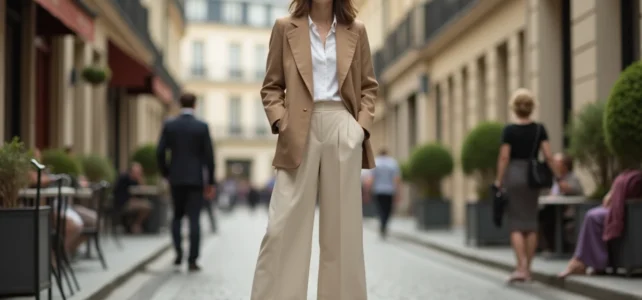
Each season brings its share of clothing novelties, but the fashion trends that leave a lasting mark on a wardrobe share a common point: they allow for the construction of a unique style without starting from scratch. Rather than chasing every micro-trend, it’s better to understand the underlying movements that are currently redefining silhouettes, materials, and colors.
Quiet luxury and premium minimalism: the foundation of a modern style
Have you noticed that giant logos on clothing are becoming increasingly rare? This decline reflects a wave called quiet luxury. The principle is simple: focus on cut, fabric quality, and sobriety rather than brand display.
In practical terms, this translates to pieces in neutral tones (ecru, stone gray, camel), noble materials like thick linen or merino wool, and meticulous finishes without unnecessary ornamentation. A well-cut straight jacket, fluid pleated trousers, a midi dress in ribbed knit: these basics are becoming the heart of the look.
This trend goes beyond mere aesthetics. It reflects a change in the way fashion is consumed. Specialized media like Amoureusement Mode document this evolution towards more thoughtful wardrobes, where each piece easily pairs with others.
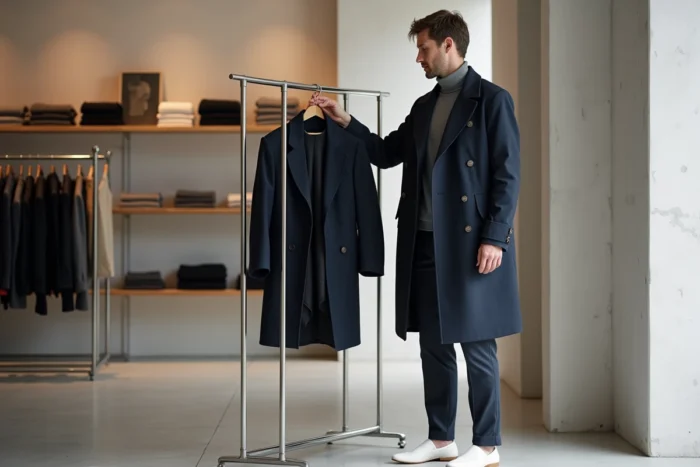
Micro-series pieces: adopting clothing that few people wear
A report from the IFM (Institut Français de la Mode) published in 2025 highlights a significant increase in independent brands producing in small series. This phenomenon relies on pre-order platforms and specialized online boutiques.
Why this choice? Because the micro-series solves a concrete problem: avoiding wearing the same outfit as everyone else. When a piece is made in just a few dozen copies, it becomes a distinctive element of your style without any particular effort.
How to spot these independent brands
- Look for creators who operate through limited drops (capsule collections of fewer than 50 pieces), often announced on their social media before going on sale.
- Favor sites that display the manufacturing location and the number of copies produced, a sign of a transparency approach.
- Keep an eye on multi-brand online boutiques that select emerging labels, as they do curation work that large retailers do not offer.
This approach requires a bit more research, but it builds a wardrobe where each piece tells an intention rather than an impulsive purchase.
Seasonal colors and materials: what really changes for spring-summer
The color trends for the season oscillate between two poles. The first remains faithful to minimalism: off-white, rosy beige, powder blue. The second embraces a bold palette, with deep red and colorful leather that provide contrast without falling into excess.
On the materials side, leather is making a strong comeback, including for lightweight pieces like skirts or sleeveless vests. Linen and textured cotton dominate spring outfits, while synthetic blends are declining in favor of natural or semi-natural fibers.
Pairing colors without a false note
The most reliable reflex: choose a neutral base (beige trousers, cream skirt) and add a single strong colored piece. A red top over ecru trousers works better than a total multicolor look.
For autumn-winter, the first indications from the runways point towards earthy tones and thick knit dresses. Anticipating these transitions avoids last-minute purchases.
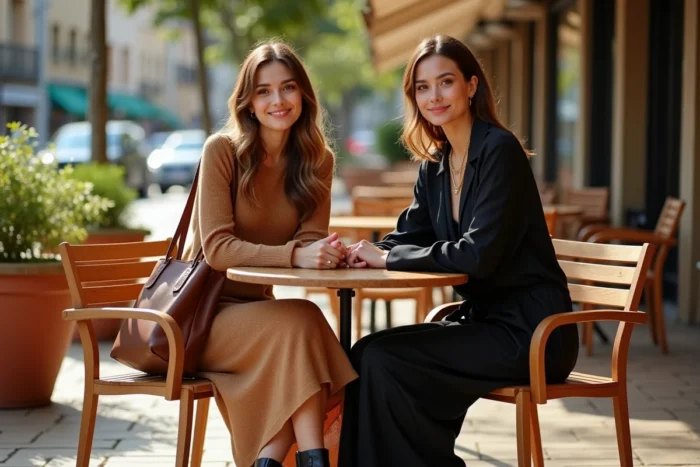
Sustainable textiles and regulation: what fashion can no longer ignore
The European Commission adopted between 2024 and 2025 a legislative package titled “Sustainable and Circular Textiles”. These provisions will gradually change what brands can produce and how they must inform consumers.
For a buyer, this translates to more precise information on labels: fiber origin, estimated durability, recycling possibilities. These new European rules make it easier to choose sustainable pieces, even without textile expertise.
This regulatory framework also accelerates the transformation of major houses. Groups like LVMH and Kering are now integrating textile innovation into their annual reports, a sign that sustainability is no longer a marketing argument but a documented industrial constraint.
Tips for sorting real commitments from greenwashing
- Check if the brand publishes a CSR report or numerical data on its supply chain, not just an “eco-responsible” slogan.
- Prefer recognized certifications (GOTS for organic cotton, OEKO-TEX for the absence of harmful substances) over self-awarded labels.
- Be wary of “green capsule” collections launched by brands whose main model remains overproduction.
Building a unique style in 2026 is less about accumulating pieces than understanding what is at play behind each garment. The true marker of a modern look is the coherence between pieces: materials that converse, controlled colors, cuts that last several seasons. The most convincing wardrobes do not follow twelve trends at once; they choose two or three and push them to the max.