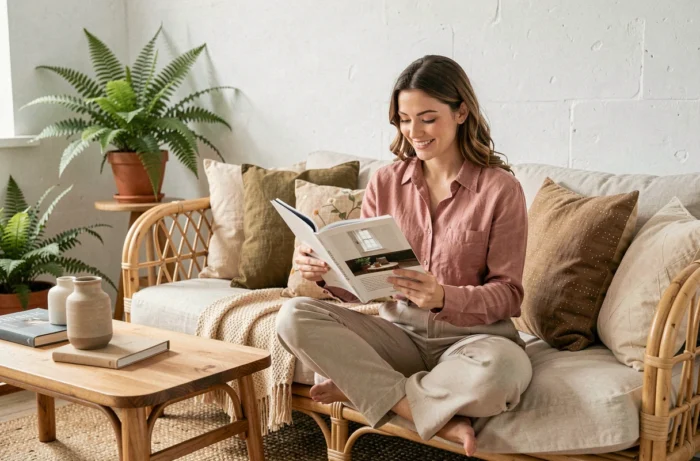
Blogs dedicated to interior decoration are multiplying, but not all offer the same level of reading. Marie Carotte’s decor blog fits into this landscape by combining visual inspiration and practical tips for interiors that evolve with the seasons.
Panoramic wallpaper and plant walls: the nature decor trend in 2026
Traditional competitors in the online decor sector extensively cover seasonal color palettes. A less covered topic deserves attention: the massive return of panoramic wallpaper with plant patterns. The nature trend is transforming French interiors, with searches for green living rooms on the rise.
This resurgence is not limited to sticking a floral panel behind a sofa. Panoramic wallpaper acts as an architectural element that redefines the proportions of a room. A whole wall dressed in a tropical foliage pattern creates a depth that paint alone cannot produce. Manufacturers now offer ranges on non-woven substrates, which are easier to apply and remove, responding to a growing demand for adaptable decor.
To explore this type of subject with photographic situations and feedback, Marie Carotte’s decor blog serves as a resource that documents material choices as well as visual results.
Autumn-winter trend colors: eggplant, tobacco brown, and lime
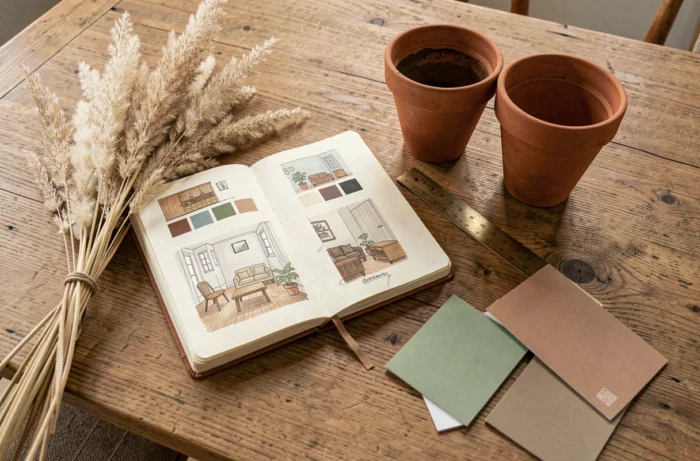
The autumn palette for 2026 moves away from the neutral tones that have dominated in recent years. Several specialized media, including Le Journal de la Maison and Marie Claire Maison, converge on three chromatic families: eggplant, tobacco brown, and lime finishes.
Eggplant brings visual density without the coldness of black. Applied to a single wall or an accent piece, this shade works particularly well in north-facing rooms, where it absorbs the low light without darkening the space. Tobacco brown, on the other hand, pairs well with raw materials like linen or light wood.
Lime finishes are making a strong comeback for both technical and aesthetic reasons. Lime creates variations in surface texture, with each layer reacting differently to light. The result is vibrant, far from the flat uniformity of classic acrylic paint.
Balancing boldness and durability
Adopting a strong color raises the question of weariness. An eggplant wall may be appealing for six months but can become overwhelming. Field feedback varies on this point: some decorators recommend reserving saturated shades for high-traffic areas (hallways, entrances), while others integrate them into the living room without hesitation.
A pragmatic approach is to focus color on reversible elements: cushions, throws, frames, and decorative objects. The wall remains neutral, and the palette changes with the seasons.
Reuse and decoration: what the PEMD diagnosis changes
Reuse in interior design goes beyond mere good intentions. Seven methodological sheets now frame the PEMD diagnosis (products, equipment, materials, and waste), according to the Diagnostic PEMD website. These sheets specify the criteria to examine and recommend distinguishing between decor and references, rather than stopping at just the material family.
An old parquet floor, a glass door, or a brass light fixture can thus be characterized, cataloged, and proposed for reuse before a renovation. For decor enthusiasts, this is a source of unique pieces with documented traceability.
- Metal or blown glass light fixtures, when rewired to standards, become decorative pieces in their own right
Light fixtures made from bio-sourced materials: what Maison et Objet 2026 reveals
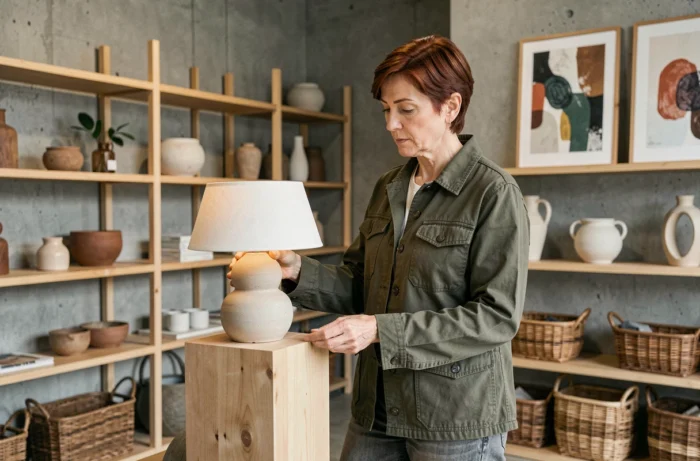
The Maison et Objet fair in September 2026 highlighted a discreet yet structural evolution: the arrival of bio-sourced materials in decorative lighting. Marie Claire Maison has identified this trend, which goes beyond style to touch on the very composition of light fixtures.
We are talking about plant fibers, natural resins, and ceramics fired at low temperatures. These materials modify the diffusion of light. A palm fiber pendant does not cast the same shadows as a synthetic fabric lampshade. The texture of the material becomes a parameter of light design.
Limitations to be aware of before buying
The available data do not yet allow for conclusions about the long-term durability of certain plant fibers exposed to the heat of a bulb. Manufacturers communicate about compatibility with low-energy LED lights, but feedback on usage over several years is lacking.
- Check the compatibility of the light fixture with LED bulbs, the only ones that do not emit problematic heat for natural fibers
- Prefer pendants and wall sconces over table lamps, where the risk of direct contact with the light source is higher
- Ask the manufacturer about the origin and treatment of the fiber used, two pieces of information that are still rarely displayed on labels
Interior decoration finds itself at a crossroads between aesthetic choices, environmental constraints, and new regulations like the PEMD diagnosis. The trends for autumn 2026, from panoramic wallpaper to bio-sourced light fixtures, reflect a fundamental shift towards interiors designed as much for their materiality as for their appearance. Keeping up with these developments requires regular monitoring, and specialized blogs that document concrete feedback remain the best filter between fleeting trends and sustainable choices.