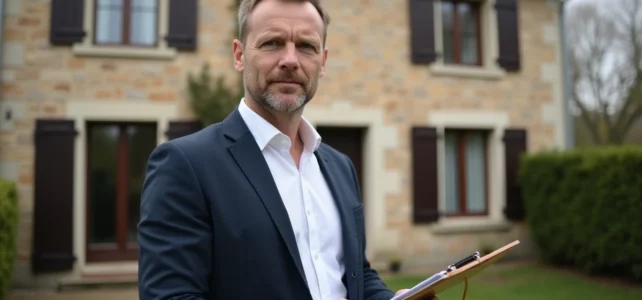
In Sarthe, real estate listings mentioning divorce as the reason for sale are not uncommon. The department, driven by the attractiveness of Le Mans and its surrounding municipalities, shows an active market for individual houses, but it is less tense than in metropolitan areas. This context creates a landscape where negotiation remains possible, without guaranteeing the good deal that the label “urgent sale” might suggest.
For a buyer, the question arises in concrete terms: does the listed price reflect a real discount, or does it mask legal and technical constraints that the seller’s urgency will not resolve?
Liquidation of the matrimonial regime and real estate sale in Sarthe
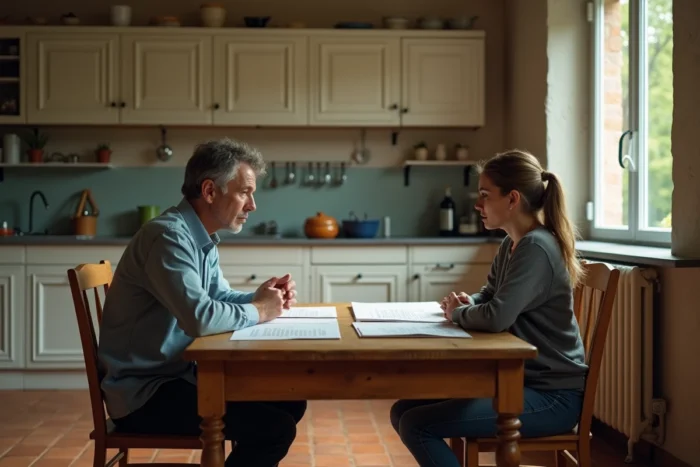
Before focusing on the price, a buyer must understand what is at stake on the seller’s side. During a divorce, the marital home is part of the liquidation of the matrimonial regime. The two ex-spouses must agree on the sale, the minimum price, and the distribution of the proceeds from the sale.
When this agreement exists, the sale proceeds like any other transaction. When it does not, the situation becomes complicated. A family court judge can order the sale, but the timelines extend, and the potential buyer finds themselves facing two parties whose interests diverge.
The main risk: signing a sales agreement while one of the spouses contests the price or blocks the process. The notary checks the authorizations, but a disagreement between spouses can delay the sale by several months. In Sarthe, where notarial timelines are already two to three months on average, this uncertainty weighs on the schedule of a buyer who also has a loan to finalize.
Searching for a house for sale due to urgent divorce in Sarthe therefore requires first verifying whether the divorce procedure is sufficiently advanced so that the sale is not blocked by a dispute between the parties.
Real discount on the sale price: what the Sarthe market allows
The commercial argument of these listings is based on the idea that a pressed seller accepts a price below the market. The reality is more nuanced.
The market for individual houses in Sarthe has experienced a slowdown after the period of high demand post-Covid. Prices are no longer skyrocketing, but transaction volumes remain strong, particularly around Le Mans and in municipalities like Allonnes, Coulaines, or La Flèche. A seller in a divorce situation is therefore no longer “backed into a corner” as they might have been a few years ago.
- The negotiation margin depends on the stage of the procedure: an amicable divorce already finalized leaves little room for discounts, as both parties have validated a minimum price with their lawyer.
- A contentious divorce, where one spouse wants to sell quickly to “turn the page,” may offer a wider negotiation window, provided the other party does not obstruct.
- Properties located in deep rural areas of Sarthe, far from the Le Mans-Tours or Le Mans-Angers routes, are already experiencing downward pressure independent of the divorce. The “urgent” discount then overlaps with a structural weakness in the local market.
The discount related to divorce rarely exceeds the classic negotiation margin on a comparable property without an urgency mention. What changes is the speed with which the seller accepts an offer below the listed price, not necessarily the final amount of the transaction.
Technical diagnosis and condition of the property: the trap of deferred maintenance
A couple in divorce proceedings rarely invests in the maintenance of the marital home during the process. Roof repairs, electrical upgrades, boiler maintenance, or sewage system upkeep: these expenses take a back seat when priorities lie elsewhere.
For the buyer, this means that the property may present a lack of maintenance accumulated over several months, or even several years. The mandatory diagnostics (DPE, asbestos, lead, sanitation) provide a technical snapshot, but they do not cover everything. The condition of the roof, the quality of the attic insulation, or the compliance of the heating installation require a more thorough inspection.
In Sarthe, a significant portion of the housing stock dates from the 1970s to 1990s. These constructions often exhibit poor energy performance. The 2026 finance law strengthens incentives for energy renovation, meaning that the buyer will likely need to budget for work to bring the property up to current standards.
Points of caution before signing
- Request the history of completed work and check if any quotes were established before the couple’s separation.
- Engage an independent professional for a pre-technical diagnosis beyond legal obligations, particularly regarding the framework and humidity (common in Sarthe houses in high groundwater areas).
- Verify the compliance of non-collective sanitation, which is very common in rural municipalities of Sarthe, as bringing it into compliance can represent a significant cost.

2026 tax framework and purchasing strategy in Sarthe
Buying a property resulting from a divorce does not change the tax applicable to the buyer, but the 2026 tax context influences the relevance of the operation. The elimination of the Pinel scheme directs investors towards older properties requiring work, a segment where houses sold in urgency can find their place.
For a buyer considering a primary residence, energy renovation aids become a lever to integrate right from the budget calculation. A property listed below market price but classified F or G in the DPE may ultimately cost more than a well-maintained property sold without urgency.
The calculation must include the purchase price, notary fees, estimated costs for compliance work, and the time of immobilization before moving in. In a Sarthe market where the supply of houses with land and garage remains abundant, comparing the total cost of an “urgent divorce” property with that of a classic property in the same area helps avoid turning an apparent opportunity into a poor financial deal.
Buying a house sold due to divorce in Sarthe is neither an automatic bargain nor a systematic trap. The quality of the deal depends on three verifiable parameters: the progress of the judicial procedure, the actual technical condition of the property, and the gap between the asking price and the total cost after renovations. Without this triple verification, the seller’s urgency mainly benefits the seller.